Erythrodermic Psoriasis
Erythrodermic psoriasis is a rare and severe form of psoriasis that affects 1-2% of those who already have psoriasis. It affects all of the skin on the body and can cause intense itching, burning and inflammation.
Erythrodermic psoriasis is a medical emergency which can lead to a loss of fluid (dehydration) and can interfere with the body’s ability to control temperature, (this can also happen with generalised pustular psoriasis (GPP), a separate condition characterised by a sudden onset of fluid filled pustules).
Although there are no pustules with erythrodermic psoriasis, urgent admission to hospital is needed as it can cause your body to lose proteins and fluid, leading to further problems such as infection, dehydration, heart failure, hypothermia and malnutrition. In some cases, it can be life-threatening.
What are the main symptoms of erythrodermic psoriasis?
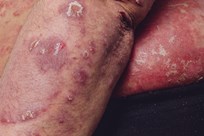
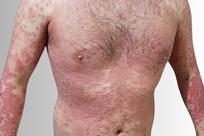
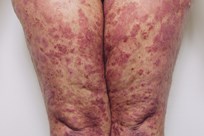
Erythrodermic psoriasis is characterised by widespread and inflamed redness over the majority of the skin’s surface. Between 90% and 100% of the skin can be affected and it will turn red, or dark. This can be accompanied by itching, fatigue and in some circumstances hair loss and joint and muscle aches. You may develop peeling skin that comes off in large sheets or lose fingernails and toenails.
It can occur quickly over a few days or weeks or more gradually over several months from pre-existing psoriasis.
Individual plaques of psoriasis cannot be seen because they have merged together. Scaling may be fine and silvery and less noticeable than the scale seen with plaque psoriasis, while the skin may feel warm to touch.
Flu-like symptoms may occur along with a fever, and swelling, particularly of the lower legs and ankles. It can also affect the heart and kidneys.
If you think you may have erythrodermic psoriasis, it is important to seek urgent medical help. You should speak to a GP immediately or if this is not possible, call 111 or seek urgent help at a hospital.
What causes erythrodermic psoriasis?
Erythrodermic psoriasis usually occurs if a person’s psoriasis is acute or unstable.
It can sometimes be triggered by a number of things including:
- Suddenly stopping the use of strong corticosteroids after a prolonged time
- Some medications including certain types of anti-malarials and lithium
- Strong coal tar preparations
- Infections
- Low calcium levels
- Phototherapy or sunburn
- Excessive alcohol consumption.
How can erythrodermic psoriasis be treated?
Erythrodermic psoriasis requires immediate medical attention and can be difficult to manage. Urgent admission to hospital is needed in order to replace lost fluids and to prevent hypothermia (low body temperature) and dehydration.
Initial treatment can include:
- Immediate hospitalisation for intravenous fluids and to stabilise temperature
- Applying gentle emollients or creams such as Betnovate RD (Ready Diluted) to the affected areas
- Plenty of bed rest
- Antibiotics, water tablets and help with nutrition can also be given to help with any complications
Systemic therapies such as ciclosporin or low doses of methotrexate or acitretin were traditionally used to treat erythrodermic psoriasis. More recently it has been possible to successfully treat erythrodermic psoriasis with biologics (biologic medications are specifically designed to mimic chemicals that are naturally found within the human body, and act to correct something that is going wrong. A well-known biologic treatment (that is not used for psoriasis) is Insulin, which is taken by people with diabetes. Although it is important to note that the specific biologic used may be dependent on the patient and local guidelines.
Certain treatments for plaque psoriasis can worsen erythrodermic psoriasis. You shouldn’t use the following without first consulting your dermatologist:
- Topical coal tar preparations
- Phototherapy
- Oral corticosteroids
Further information on specific types of psoriasis and its treatments is available from the Psoriasis Association. The information in this resource is not intended to replace that of a healthcare professional: If you have any concerns or questions about your treatment, do discuss this with your doctor or pharmacist and always read the patient information leaflet to make sure you are using them correctly.
For more information, or for a list of resources used in the production of this information page, please contact the Psoriasis Association.
Resources
The information on this page is also available in our Erythrodermic Psoriasis information sheet.
Produced January 2026 (Review date: 01/29)